The most inviting rooms have a quiet sense of order. Pieces relate to one another. Movement feels natural. Nothing needs to compete. That balance begins before a particular sofa or table enters the picture: it begins with an understanding of the room itself.
Begin with the room.
Notice its dimensions, openings and the paths you use every day. Look at where light falls and which view you want to frame. A floor plan records the essentials; tape on the floor makes a proposed footprint tangible. Include the spaces that furniture needs when it is in use: a chair pulled back, a cabinet opened, someone passing behind a sofa. These everyday movements should help shape the composition.
Choose an anchor.
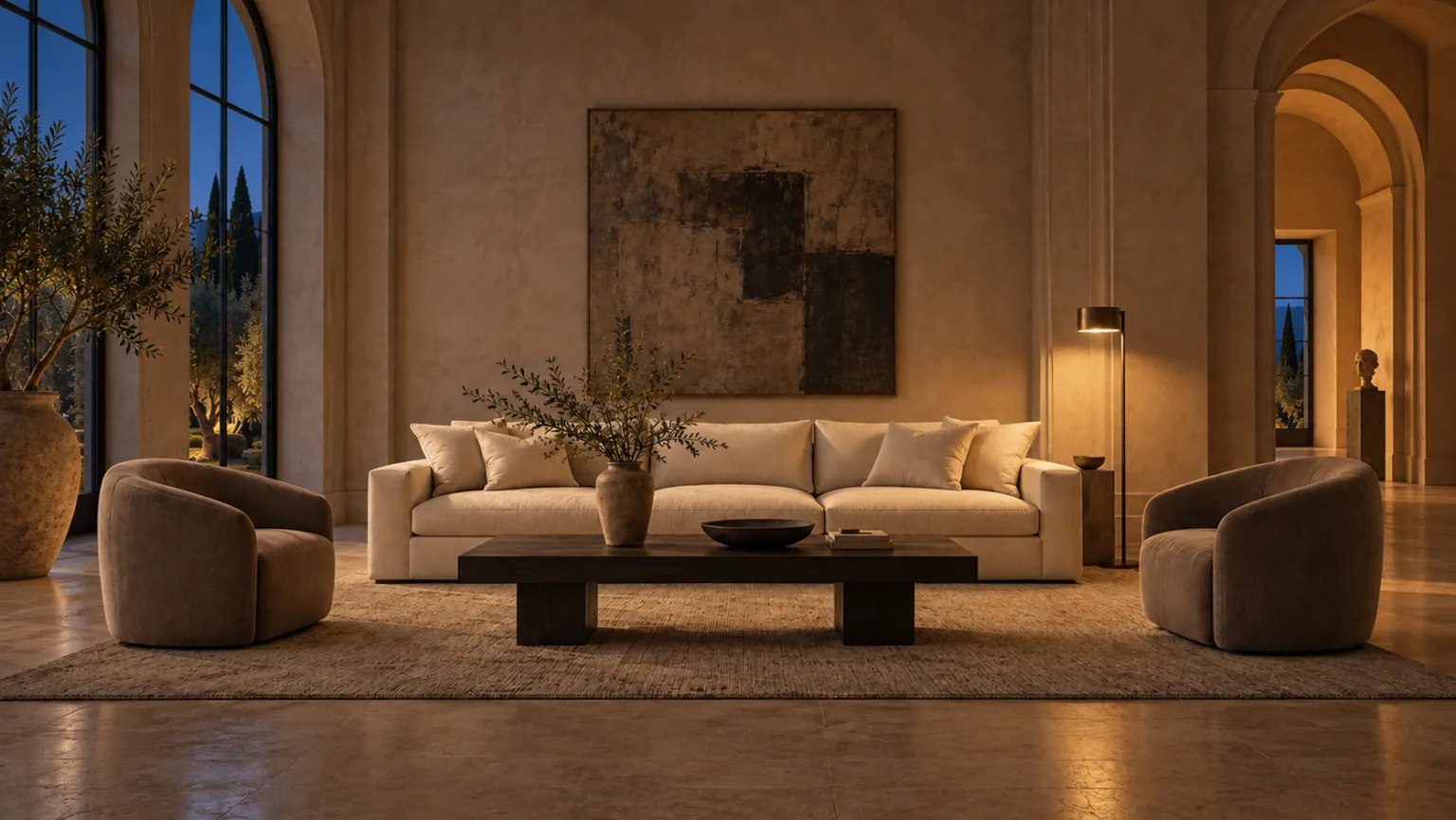
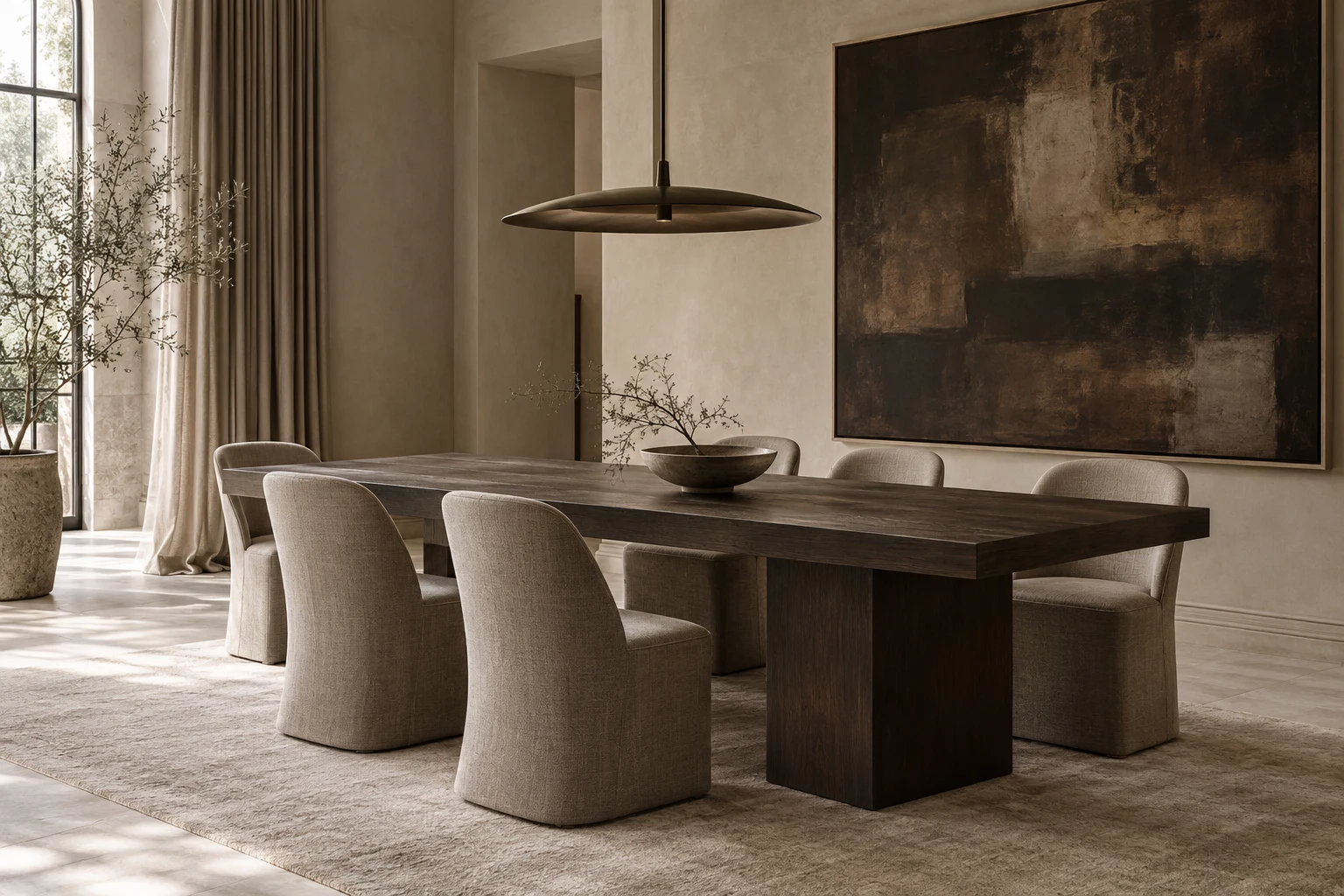
Start with the piece that gives the room its purpose: a sofa for conversation or a table for gathering. Consider height and visual weight as well as width. A low, substantial form has a different presence from a taller piece on slender legs, even within the same footprint. Choose the anchor in relation to the architecture, then let the surrounding pieces establish a useful rhythm around it.
Let contrast do the work.
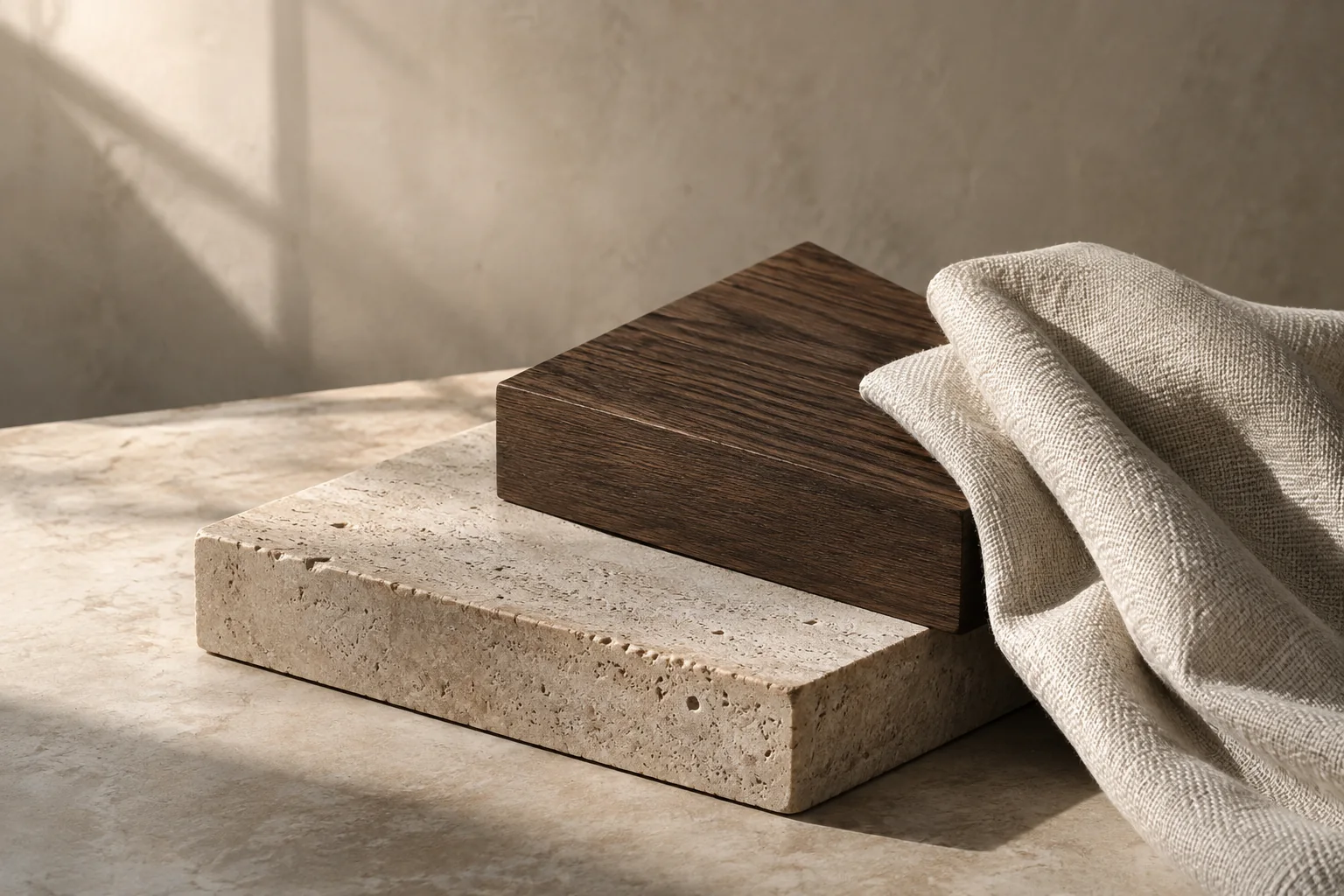
A broad table can sit beautifully beside a rounded chair. A fine woven surface can soften the effect of a solid wood form. Look for relationships without requiring every piece to match: a shared undertone, a curve repeated at a different scale, or two materials with a similar depth of color. Keep the strongest gesture clear so the eye has somewhere to settle.
Consider the view from every seat.
A room is experienced from within, as well as from the doorway. Sit where you expect to read or talk. Consider what sits at eye level, how a lamp meets a chair, and whether a table feels comfortable to reach. A composition that photographs well from one angle may still need small adjustments to feel right in daily use.
Leave space to live.
Before committing, walk through the arrangement and check the delivery route. Allow the plan to change when something feels forced. An empty corner may give the rest of the room the breathing space it needs. The aim is a home that holds its furniture comfortably, with enough room left for the people who inhabit it.