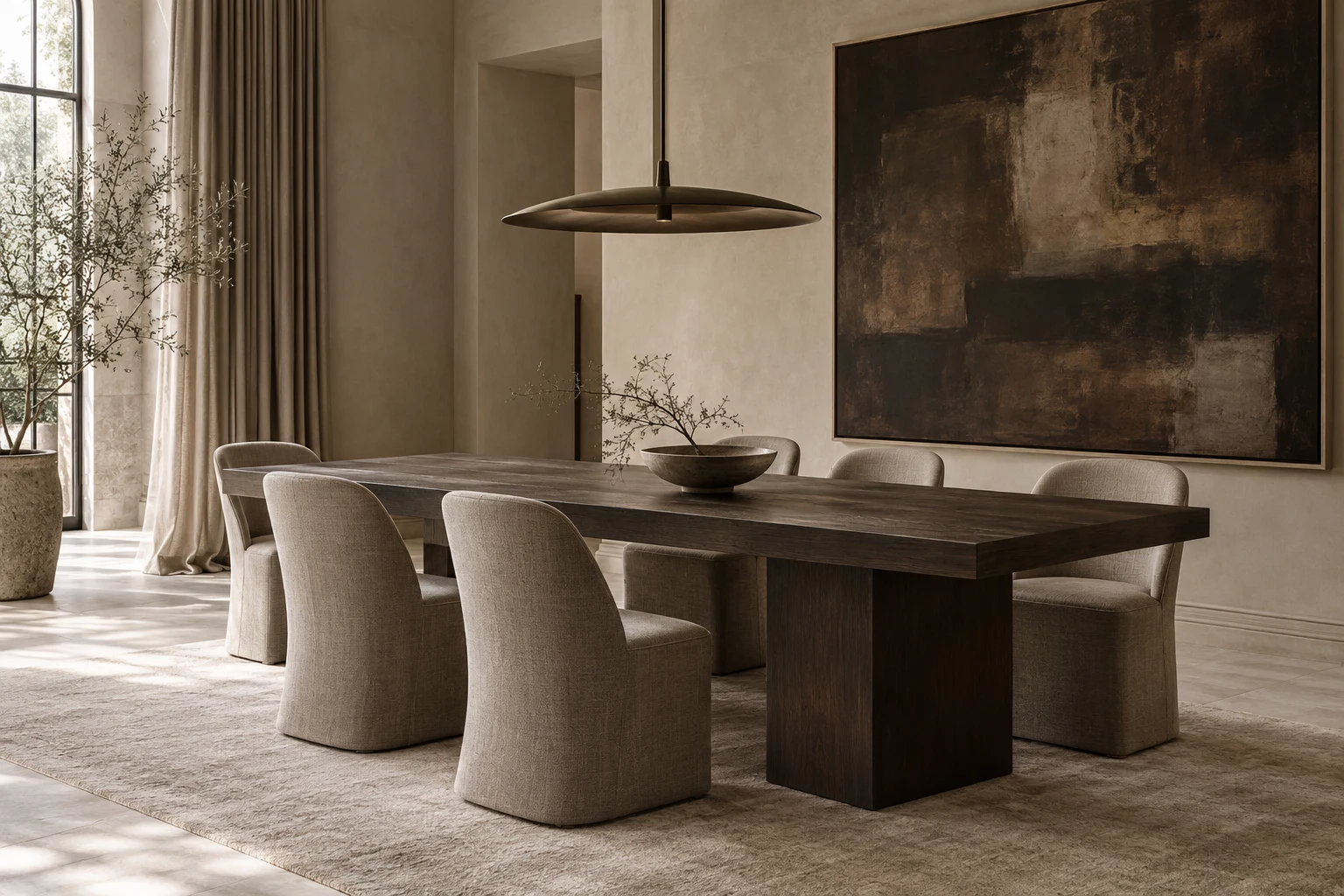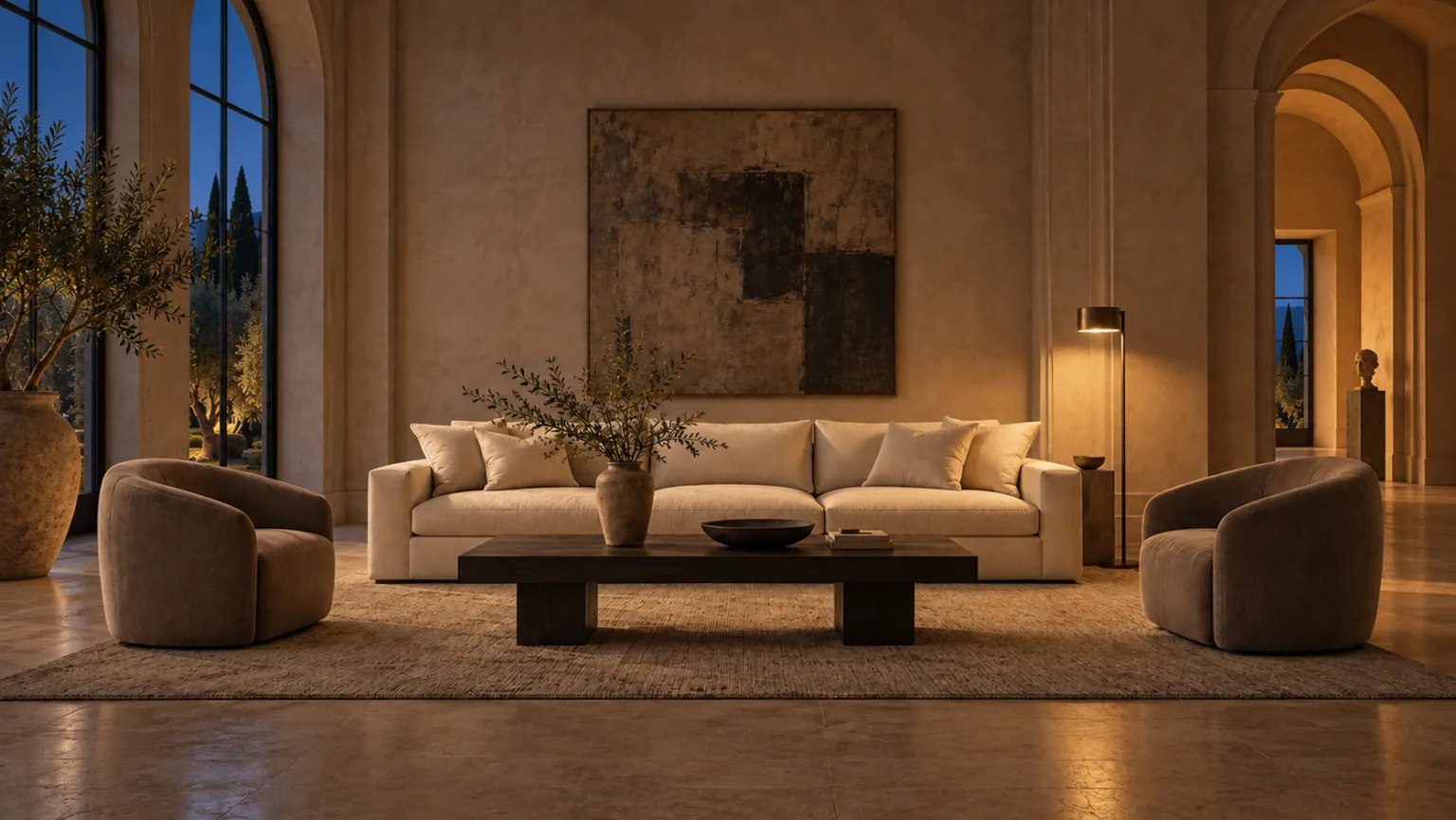
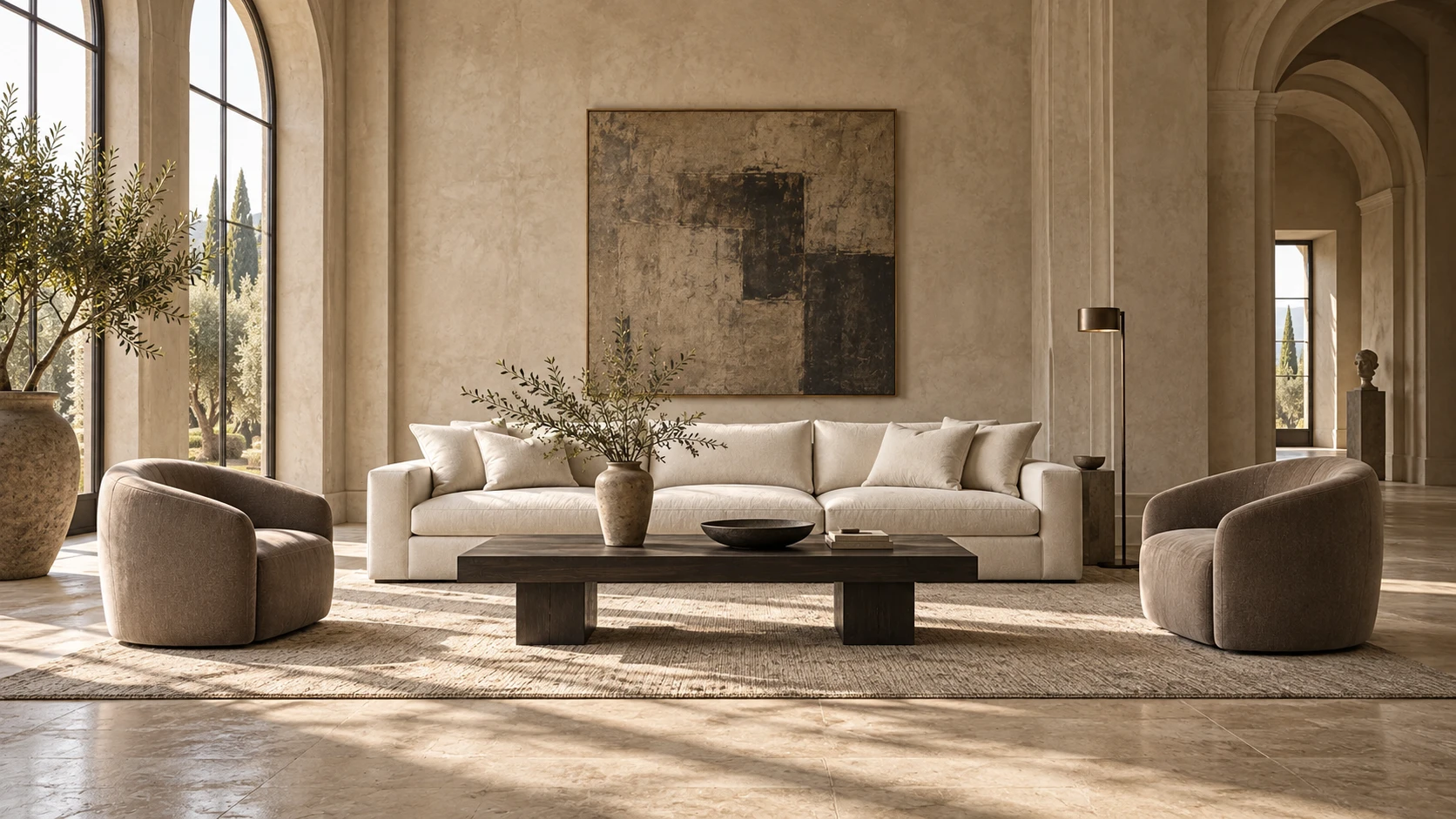
Daylight gives a room one character. Evening offers the chance to find another. Furniture becomes a silhouette, a woven surface catches the light, and the boundaries of the space can feel softer. A thoughtful lighting composition begins with the way you want to spend time there.
Begin with the evening you want.
Imagine a few familiar scenes: reading in a chair, sharing a meal, or talking after the table has been cleared. Identify where light is useful in each. A reading place needs a different kind of attention from the edge of a room. Sketch those moments into the furniture plan before choosing fixtures, so the lighting follows the life of the space.
Compose at different heights.
Try a combination of light near a seat, light at table level and light that draws attention to the architecture. Each source can have a clear purpose without working at equal intensity. A floor lamp may define a reading corner while a smaller lamp gives a distant surface presence. Consider the arrangement from a seated position, where a visible bulb or bright reflection may feel intrusive.
Allow some things to recede.
A room does not need to be equally bright in every direction. A softly lit wall can give the eye somewhere to rest; a darker area can make a nearby texture more expressive. Keep the routes people use clearly visible, then experiment with which surfaces deserve attention. Turning one light down can be as useful as adding another.
Watch how materials respond.
Move a lamp slightly and notice what changes. Light across a woven surface may reveal its texture, while light facing a polished surface may create a reflection. The same warm neutral palette can feel markedly different as the direction and balance shift. Where possible, view the actual materials with the intended light sources before making permanent decisions.
Make the transition simple.
Use the room through an evening and refine the arrangement around that experience. The lights you adjust most often should be easy to reach, and the useful combinations easy to repeat. Where fixtures and controls support it, dimming can help a room move from activity toward rest. A satisfying evening atmosphere feels natural enough that the lighting itself rarely asks for attention.